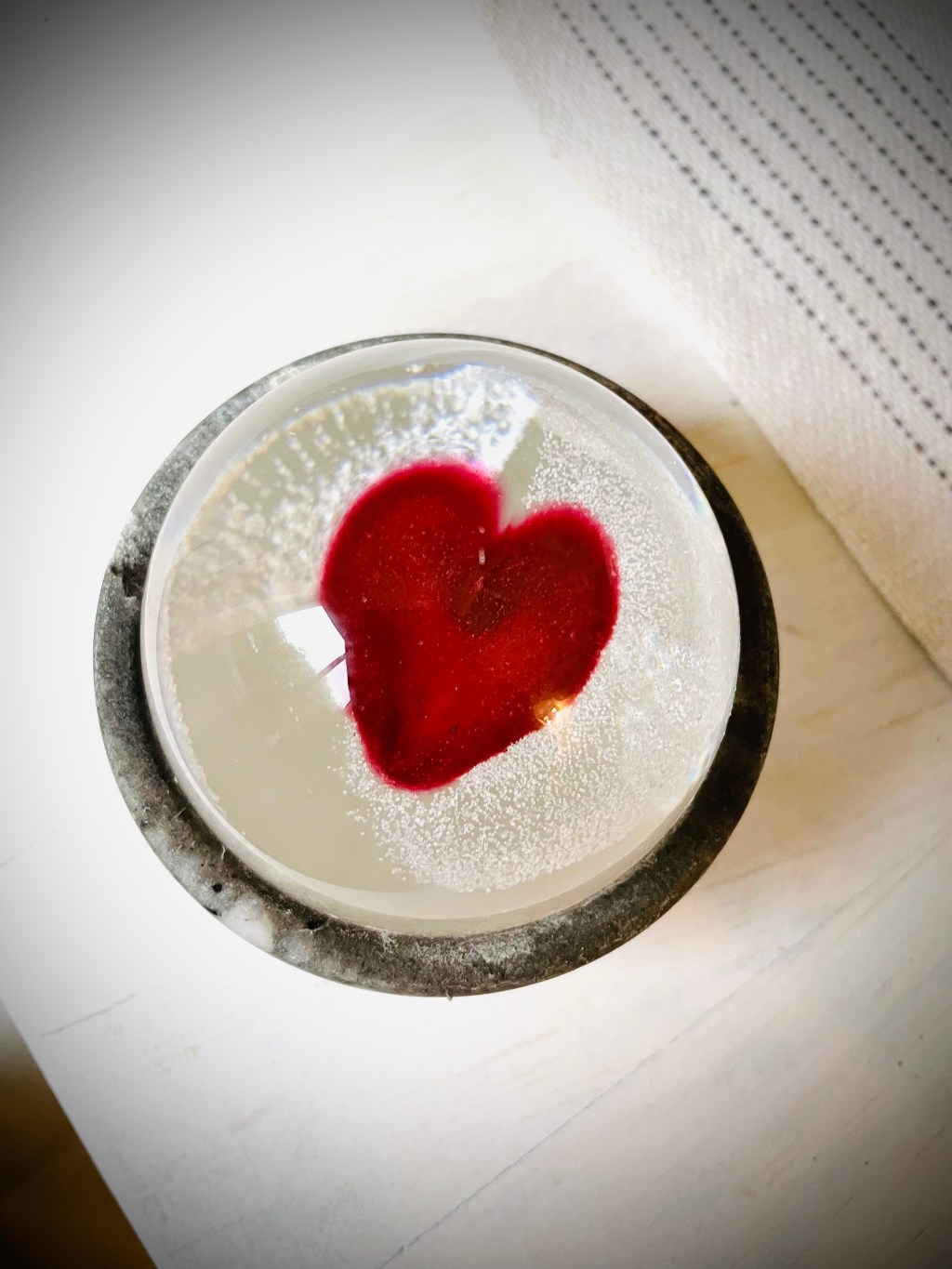
• Even In Loss

    My therapist often reminds me that there’s a benefit to everything—if you’re willing to look for it.

    At first, I didn’t really understand what she meant. How could anything good come from the messy, painful parts of life? How could loss offer anything but heartbreak?

    And then my mom died.

    In that unbearable moment, I made a quiet, intentional decision: If there was something to learn from this, I would find it. I wasn’t expecting much. Honestly, I couldn’t imagine any possible benefit to losing the person who loved me most. But to my surprise, a few truths began to emerge—softly and slowly, but I had to be willing to see them.

    Before she passed, I lived in constant fear of her death. That fear started when I was 19, after she had a heart attack, and never really let me go. I wasn’t her full-time caregiver until the last few years of her life, but I was always her emergency contact, her medical advocate, and her silent watchdog. I checked in often. I kept track of medications and doctor’s visits, and I knew her medical history better than she did.

    The hospital became a second home—sterile and exhausting. I learned its rhythms, its codes, and its smells. I could navigate it like my own kitchen. All while trying to hold onto hope, even when it slipped through my fingers like sand.

    She trusted me to hold everything together. And I did. But what neither of us ever really faced was how deeply her emotional pain had taken root in her body. She was tired—not just from the illnesses that had accumulated over the years, but from a lifetime of carrying invisible wounds.

    When she died, everything changed.

    The fear that had lived in me for so long? It disappeared. The vigilance, the anxiety, the tight grip on “what if”? Gone. Lifted so gently that I almost didn’t notice. In its place came grief—deep, suffocating, relentless. But alongside it came something else, something I hadn’t expected: peace.

    For the first time in years, I could breathe.

    And in that breath—new, strange, and unsteady—I began to see the world differently. Grief has a way of sharpening your vision. It changes your relationship with love, with time, and with yourself.

    When you lose your mother, especially if she was the person who loved you most, you start to understand love in a new way. The love she gave you, the kind that was made just for you, disappears with her. Nothing replaces it, but in its absence, you begin to see the love that’s been around you all along.

    The love from friends who show up.
    The love in a therapist’s steady wisdom.
    The love in blooming flowers, in a rising sun, in a familiar song on a hard day.

    That love is real. And it waits for you. All you have to do is let it in.

    And when you do—when you start to notice the quiet ways love persists—something else begins to grow alongside the grief.
    Something gentle.
    Something healing.

    Gratitude.

    Gratitude for the light my mother left behind—light inside me that refuses to dim.
    Gratitude for the people still here: family, chosen family, and strangers turned soulmates through shared loss.
    Gratitude for every tender moment of beauty—flowers that arrive right on time every year, the unwavering sun, and the ever present, watchful moon.

    Even in loss, there is something to be gained.

    And now, I believe her—my therapist. There is a benefit to everything. Sometimes, it’s just hidden in the folds of your heart, waiting for grief to reveal it.

  • Mom

    Today is Mother’s Day, and it feels like the first one without my mother.

    Last year at this time, I was moving through a thick fog of denial—the kind that wraps itself around grief like a protective blanket. Everything felt unreal and I couldn’t fully grasp that she was gone. This year, the fog has begun to lift, but the ache remains. I miss her desperately and I miss holding her hand, hugging her tightly, and thanking her for everything she was to me.

    Lately, I’ve been asking myself: What is mothering love? Where does it come from? Is it instinctive, or is it something handed down—a quiet inheritance passed from one woman to another over generations?

    My mother’s story makes me believe it’s both.

    She was abandoned as an infant in a church in Peru by her biological parents—Chinese immigrants who, according to what she was later told, believed that having a first-born daughter would bring misfortune. A woman I would come to know as my grandmother took her in and this woman, conservative and devoutly religious, had adopted other children before her who were much older than her.

    My mother’s adoptive siblings treated her more like a burden than a sister. Her childhood was shaped not by warmth, but by cold discipline, isolation, cruelty, and neglect. The home she grew up in may have offered shelter, but it didn’t offer comfort. And yet—somehow—she grew up to be one of the most loving people I have ever known.

    As a child, I never heard much about her past. Questions were met with silence, evasions, or subject changes. It wasn’t until the last year of her life that she began to tell little pieces of the truth—often quietly, often in the car, just the two of us. She shared stories of pain and abandonment, of violence and heartbreak, of years spent longing for something gentler, something safer.

    It broke my heart. And it made me wonder:

    Where did she learn how to love so fully?

    How did she learn to be such a good mom?

    Because she truly was.

    Despite never being given the love she so deeply deserved, my mother loved with a clarity and intensity that never left room for doubt. If she loved you, you knew. I felt that love every day of my life. I felt wanted. I felt chosen by her. She didn’t learn love by example. She didn’t grow up bathed in kindness. But she gave it anyway and that, to me, is nothing short of a miracle.

    It reminds me that love—real love—isn’t always inherited. It isn’t always passed down in perfect form. Sometimes, the most powerful kind of love doesn’t come from where it should. It comes from where it can.

    Now, I’m a mother too. And every day, I think about how I show up for my child. How I offer warmth, patience, safety, and care. How I try to give him the emotional nurturing my mother didn’t always know how to give. Because while she taught me how to love—she didn’t always know how to nurture. That kind of emotional intimacy wasn’t something she had ever been given. It wasn’t something she could easily give. And so, I had to learn it myself.

    Maybe this, too, is a part of mothering love: not just giving what you received, but daring to offer what you never got. To break a cycle. To heal, even while grieving.

    This Mother’s Day, I honor my mother not just for the love she gave me, but for the love she chose to give—against all odds, in spite of her own wounds. That love lives on in me. And now, it lives on in my child.

    That, I think, is the real legacy of mothering love.

  • The Fig Leaf

    Depression has always been a quiet passenger of mine. Anxiety rides along, too—those two have been constant companions, unwelcome but familiar. For a long time, I managed to keep moving with them in tow and even became good at it. “High-functioning,” people would say. But after my mother died, everything changed. Depression didn’t just ride shotgun anymore; it took the wheel.

    It started slowly, and then all at once.

    The first thing I did was kill all of my plants. Or maybe I let them die. Sometimes I wonder if it was intentional. I’d see them drooping, their leaves limp and browning, and think, I should water them, but then I wouldn’t. I chose not to. I’d sit on the couch and let that thought pass like a cloud I had no intention of chasing.

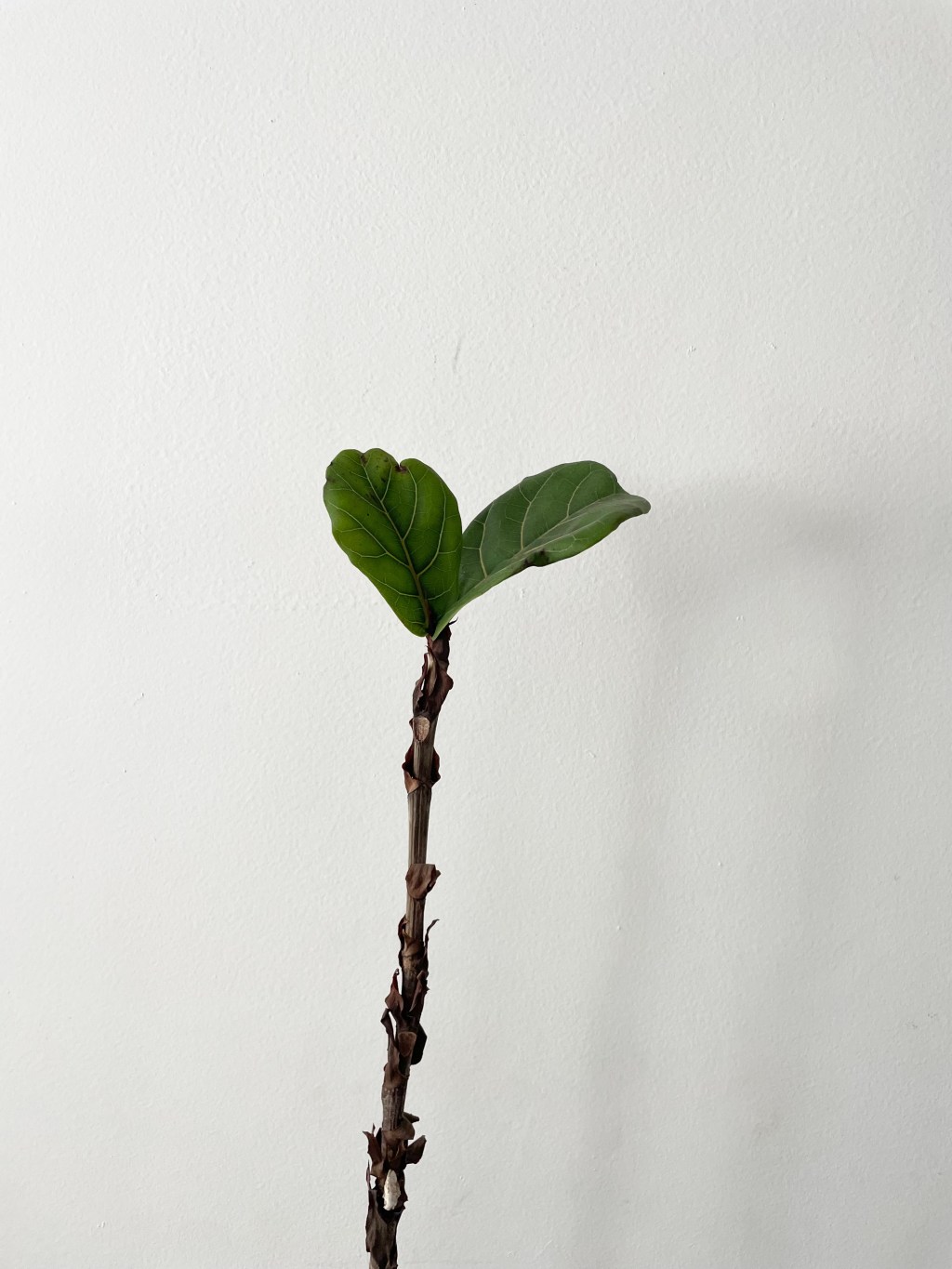
    Only two and a half plants survived—my mother’s plants. I don’t know how they’re still standing, but they are. One of them, a fiddle-leaf fig, is even trying to grow again. A tender, pale-green leaf is unfurling from its dry, cracked stem. How dare it. Why are you still alive?

    I stopped working out too. I tried a few times, half-heartedly, but I was exhausted—physically, emotionally, and spiritually. I had no energy to give to myself. And honestly, I didn’t care. I gained twenty pounds, and it felt like a physical manifestation of the emotional heaviness I’d been dragging around inside.

    I started eating things I normally wouldn’t. Junk. Empty comfort. My inner voice would say, Don’t eat that, and I’d go ahead and eat it anyway. Who cares? I didn’t. I couldn’t muster the strength to listen to the part of me that still wanted better.

    I didn’t open mail. I didn’t return books. I didn’t pay bills. I didn’t return emails, calls, or text messages. I could go on and on.

    Mostly, I stopped caring.
    I. Just. Couldn’t. Be. Bothered.

    What little energy I had left went to the people who needed me: my husband, my son, and my job. Thank God for my job. I love it, and it gave me something to hold onto when I felt like I was slipping. It gave me structure, purpose—a reason to get dressed and leave the house.

    Before, my depression looked different. It was more polite and a lot quieter. I managed to hide it behind productivity and perfectionism. I didn’t even know it was there until my therapist gently said the word—depressed. I didn’t want to hear it. I pushed back. I argued. I insisted I was just tired, just going through a phase. But she saw it clearly, and she didn’t back down. She never does. She’s had her work cut out for her from the start.

    She was right, of course. I was depressed and I just didn’t recognize it, because I was still functioning. I was still checking boxes, still smiling in photos, still making dinner and paying bills. And that’s the trick of it—depression doesn’t always look like lying in bed all day. Sometimes it looks like doing everything you’re supposed to do, with a hollowness you can’t explain.

    I learned how to do that from my mother.

    She was deeply depressed for as long as I can remember—my entire life, really. And she had every reason to be. Her story was one of loss and struggle, trauma and heartbreak, but she was also brilliant at functioning. She kept going. She got things done. She showed up for me in all the ways she could, even while carrying her own invisible weight.

    God knows I tried to lift her out of it. I spent so many years trying to make her happy. And sometimes, I succeeded. When I was pregnant, she lit up in a way I’d never seen before. It was the happiest, healthiest version of her I ever knew. The first few years of my son’s life brought her joy. It also gave her purpose. But eventually, the illness caught up to her and It took and took, until there was nothing left to give.

    Still, she functioned. Until she couldn’t. And somewhere along the way, I inherited that blueprint.

    But now I’m realizing something: I don’t want to just function. I don’t want to coast through my life like I’m checking items off a list, wearing resilience like a badge. I want more than survival.

    Which brings me back to the fig leaf. That stubborn, delicate thing reaching for light it shouldn’t have. It’s growing, despite everything. Despite me.

    Maybe, just maybe, I can grow again, too.

  • April 23, 2023

    My mother died a year ago today.
    How is that possible?

    How is it possible that I’ve spent 365 days missing her? That I haven’t heard her voice or held her hand in all that time?

    Grief plays strange tricks with time. When you lose the person who made you—who held you, loved you, shaped you—time stops meaning what it used to. It stretches and collapses in unexpected ways. Some days crawl. Others disappear. And while everyone else seems to move forward seamlessly, you’re standing still. Watching. Carrying the weight of what’s no longer there.
    Taking it all in.
    Feeling every inch of it.
    And asking, over and over: How?

    How is the world still spinning?
    How can it possibly keep turning without her in it?
    I could have sworn she was the force behind it.
    I could have sworn it was her all along.

    That feeling stayed with me for a long time and sometimes, it still does.

    I’ve learned that grief doesn’t end—it changes. It softens at the edges, even as it stays stitched into who you are. I still miss her in the quietest moments, in the places she filled with love. But I also feel her in the life I’m building around the missing. In the way I show up for others. In the things I write. In the small, everyday choices that somehow carry her fingerprint.

    One year ago today, the world shifted. And yet, somehow, I’m still here. Living. Loving. Grieving. Healing.
    And looking for her hoping that I find her again—again and again—even in the most unexpected places.

    I miss her every day.